
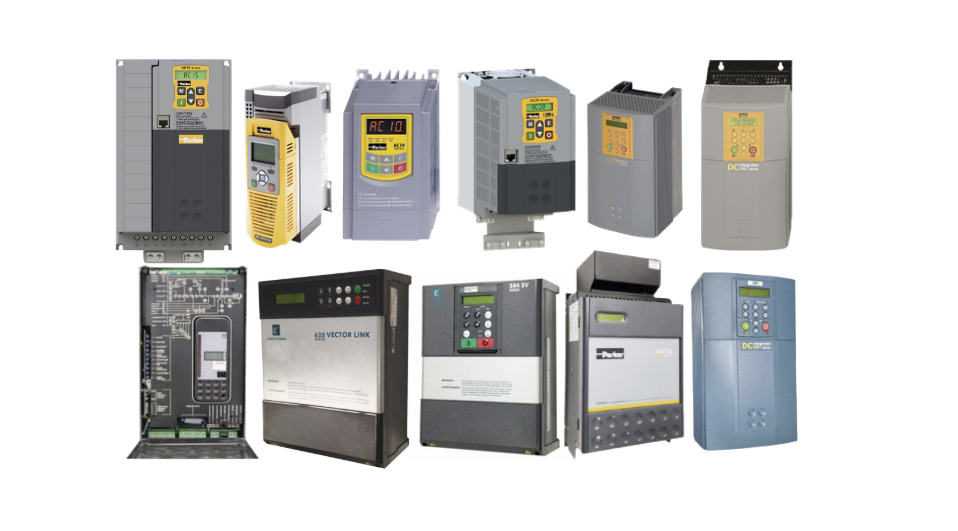
AC Drives
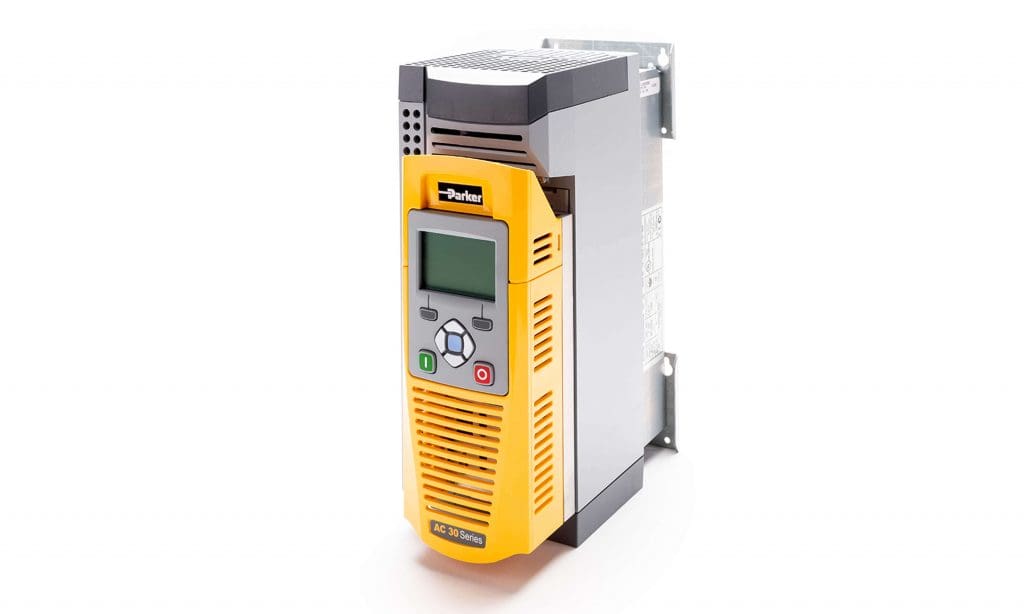
Parker AC30
The Parker AC30 is a compact variable frequency drive designed for high-performance speed control of AC induction motors. Featuring sensorless vector and V/Hz control with integrated PLC functionality, it is ideal for OEM machinery and industrial applications including conveyors, pumps, fans, mixers and compressors.

Parker AC20
The Parker AC20 is a compact variable frequency drive designed for reliable speed control of AC induction motors. Featuring sensorless vector and V/Hz control, it is ideal for OEM machinery and general industrial applications including conveyors, pumps, fans and mixers.

Parker AC15
The Parker AC15 is a compact variable frequency drive designed for precise speed control of AC induction motors. Featuring V/Hz and sensorless vector control, it is ideal for OEM machinery and general industrial applications including conveyors, pumps, fans and mixers.
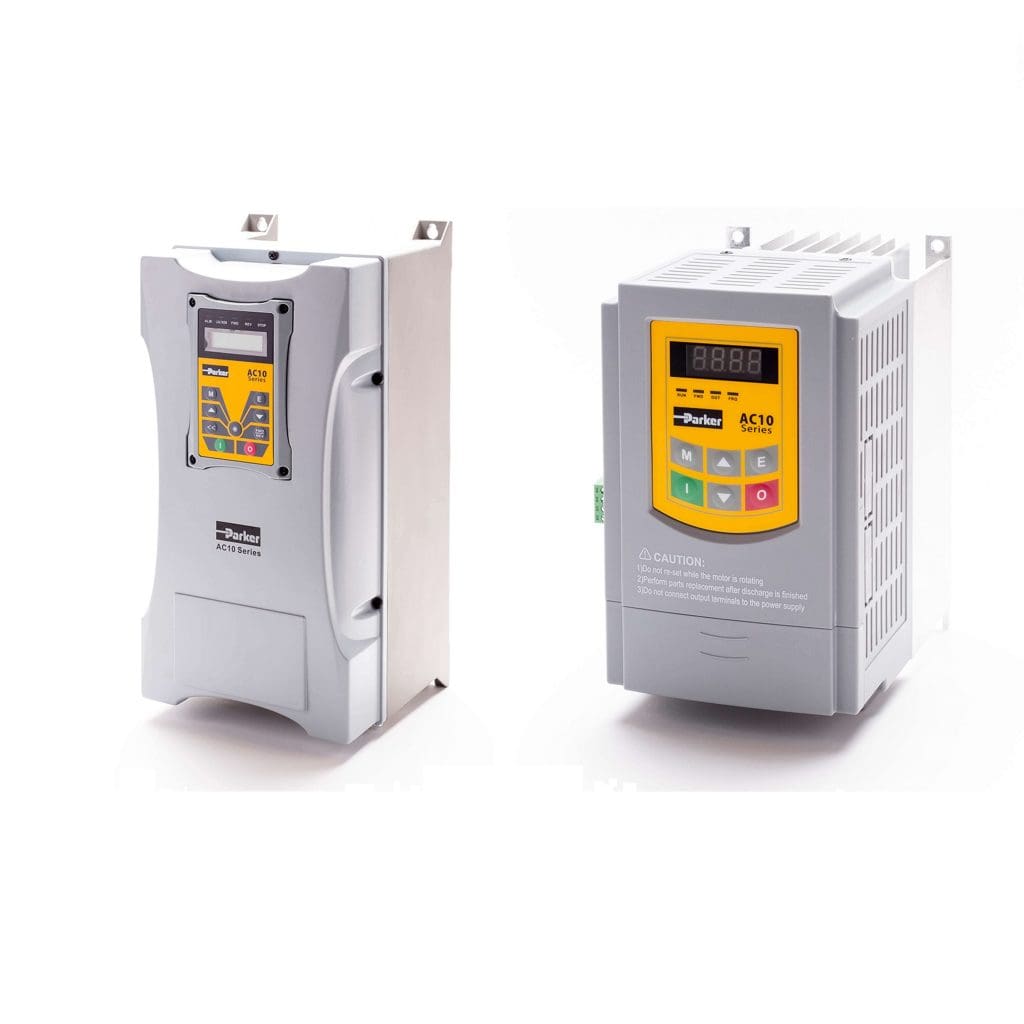
Parker AC10
The Parker AC10 is a compact variable frequency drive designed for reliable speed and torque control of AC induction motors. Featuring straightforward commissioning, V/Hz and sensorless vector control, the AC10 provides a cost-effective solution for OEM machinery, conveyors, pumps, fans, packaging equipment and general industrial automation applications.
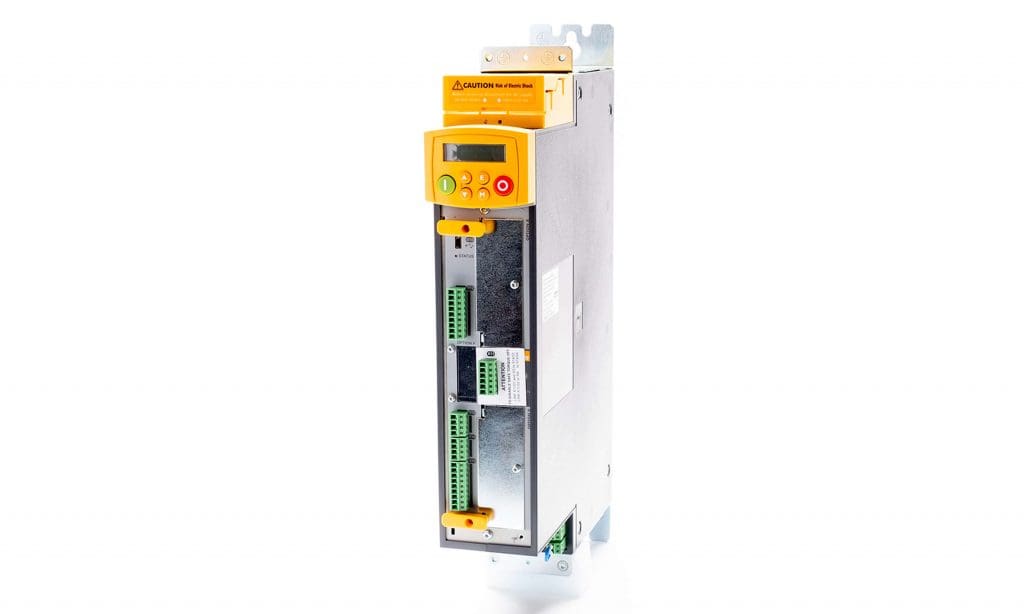
Parker 890 Range
The Parker AC890 is a high-performance variable frequency drive designed for precise speed and torque control of AC induction motors. Featuring advanced motor control, flexible communications and scalable functionality, the AC890 is ideal for process machinery, extruders, winders, cranes, hoists and demanding industrial automation applications.
Parker AC70 Range
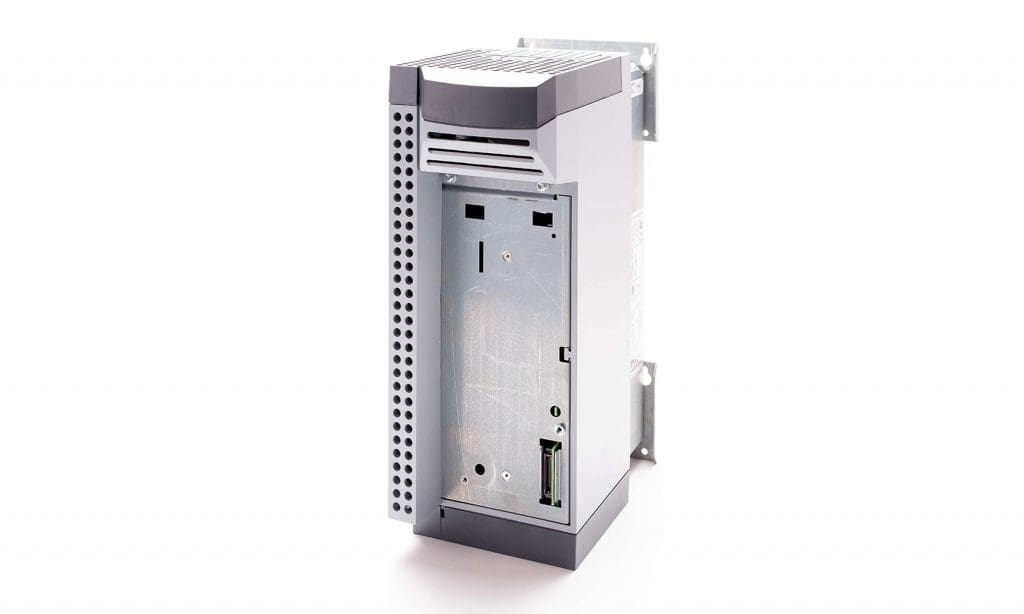
The Parker AC70 is a compact variable frequency drive designed for high-performance speed control of AC induction motors. Featuring sensorless vector and V/Hz control with integrated PLC functionality, it is ideal for OEM machinery and industrial applications including conveyors, pumps, fans, mixers and compressors.
DC Drives
Parker 590P, 591P Range
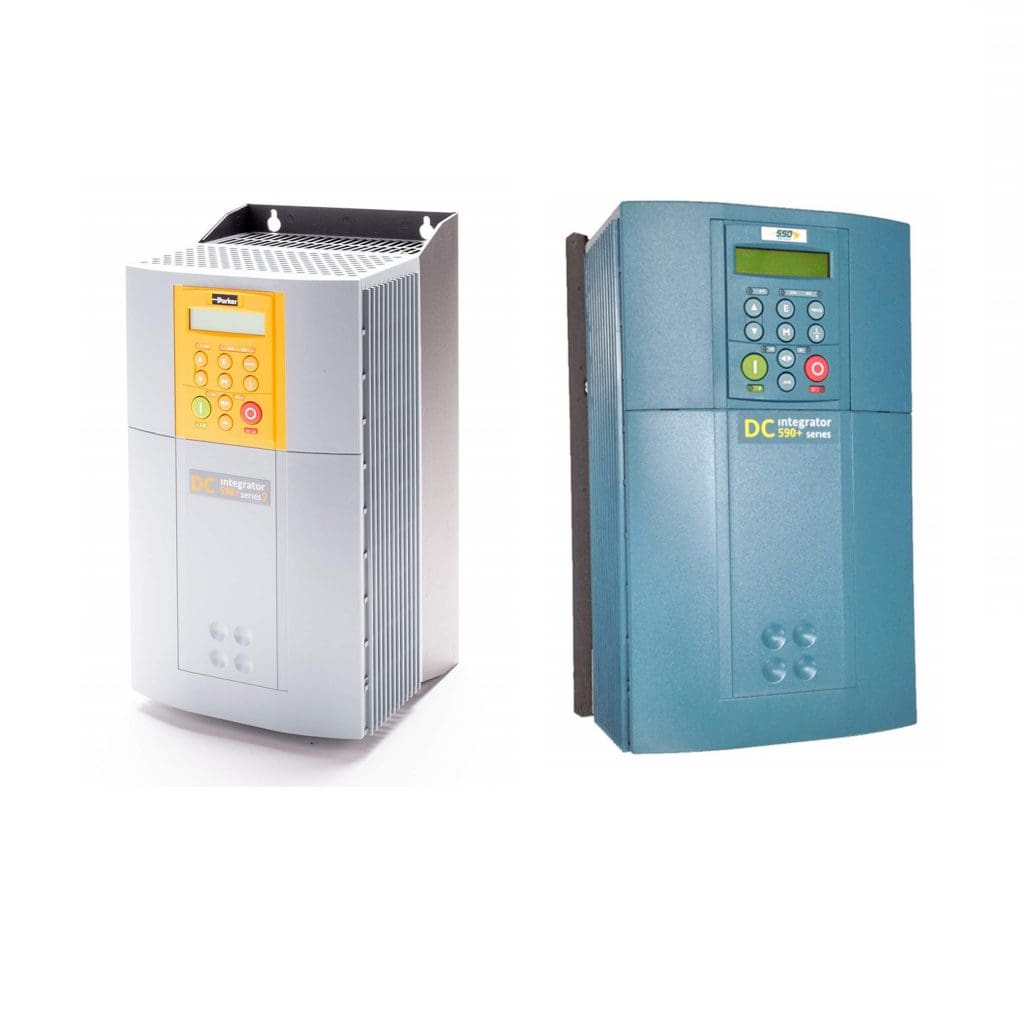
The Parker 590P and 591P Range comprises high-performance DC drives designed for precise speed and torque control of DC motors. Featuring advanced control functions, flexible communications and comprehensive application capabilities, the 590P/591P range is ideal for process lines, metal processing, paper machinery, plastics, cranes, winders and other demanding industrial applications.
Parker 590C, 591C Range
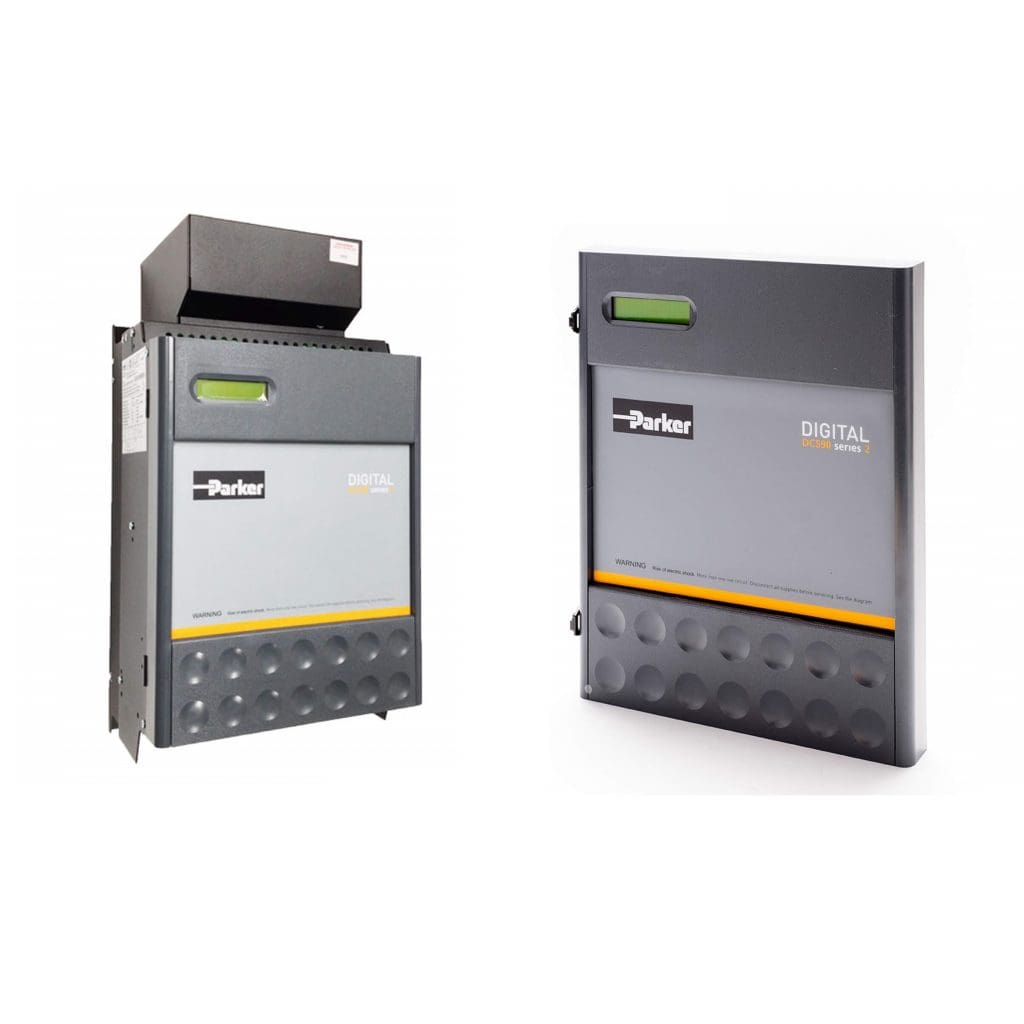
The Parker 590C and 591C Range comprises compact DC drives designed for reliable speed and torque control of DC motors. Offering flexible configuration, precise motor regulation and proven performance, the 590C/591C range is ideal for OEM machinery, conveyors, mixers, printing equipment and a wide variety of industrial DC motor applications.
Parker 590PX, 591PX Range
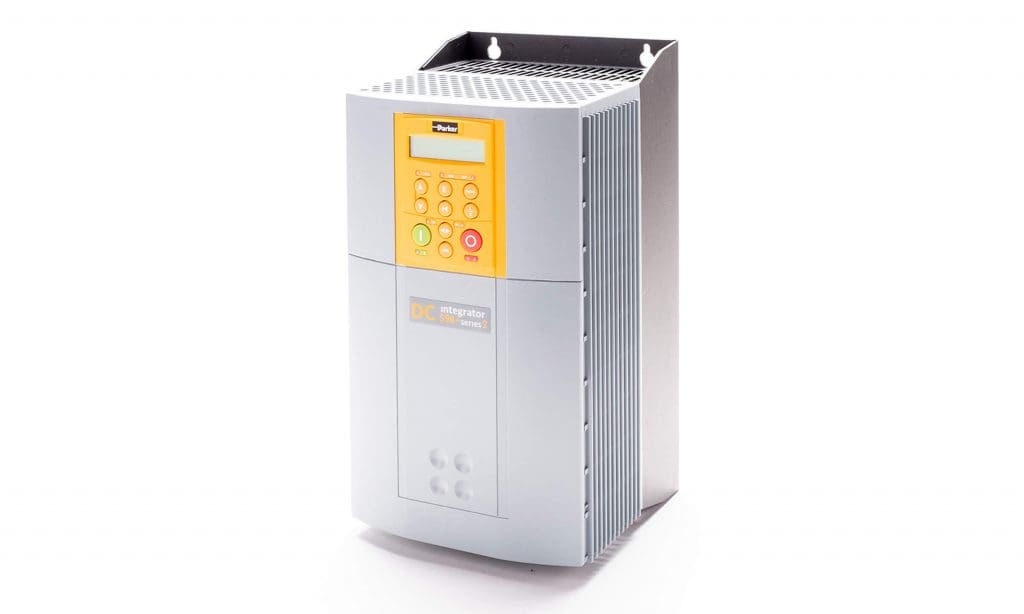
The Parker 590PX and 591PX Range comprises advanced DC drives engineered for high-performance industrial motor control. Building on the proven 590P platform, the range offers enhanced processing capability, flexible system integration and precise speed and torque regulation for demanding applications including steel processing, converting, paper, plastics and heavy manufacturing.
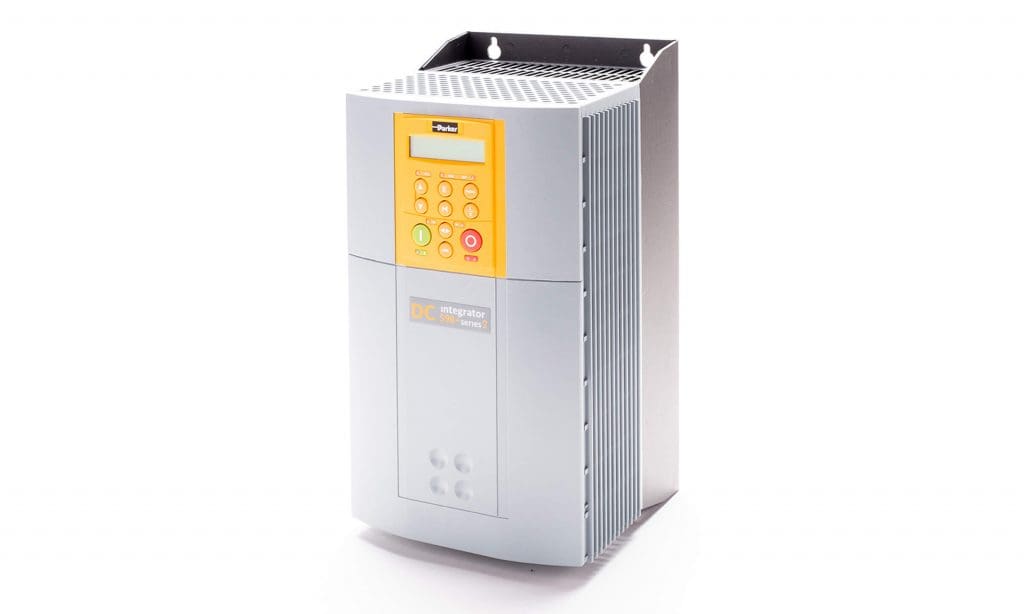
Parker 590P-DRV, 591P-DRV Range
The Parker 590P-DRV and 591P-DRV Range comprises DC drive modules designed for system integrators and OEM machine builders requiring flexible panel-mounted motor control solutions. Providing the proven performance of the 590P platform in a drive module format, the range is suitable for custom control panels, machinery and industrial automation systems.
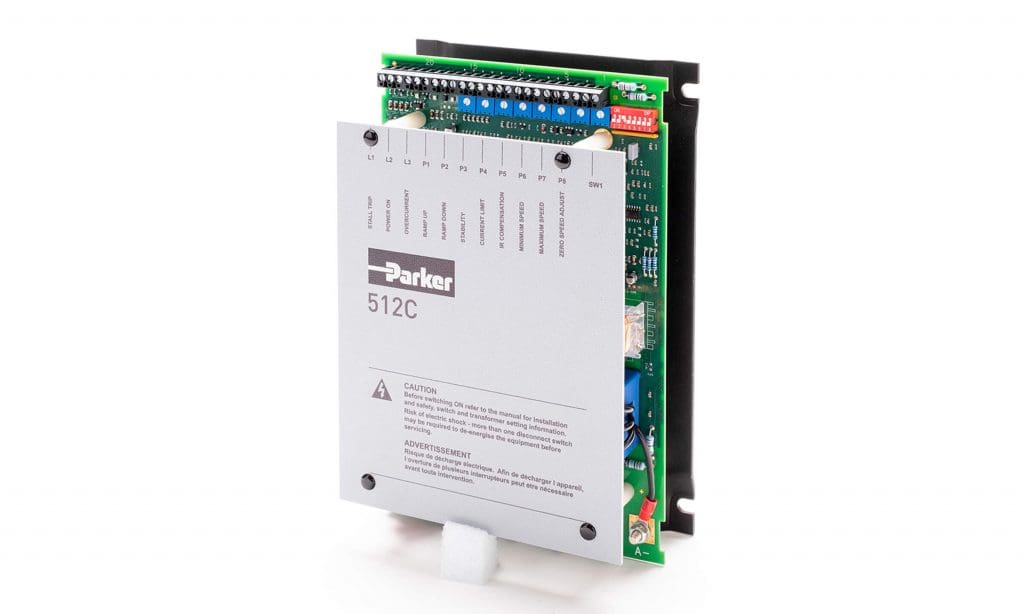
Parker 512C Range
The Parker 512C Range is a compact DC drive designed for the precise control of permanent magnet and shunt wound DC motors. Offering reliable performance and straightforward commissioning, the 512C range is ideal for OEM machinery and light industrial applications.
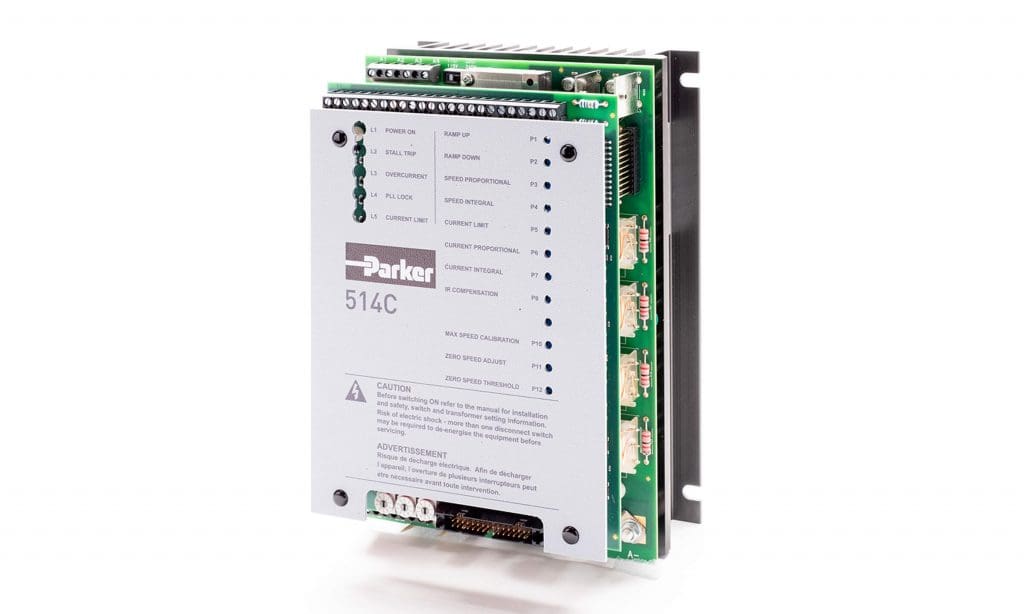
Parker 514C Range
The Parker 514C Range is a compact DC drive designed for the precise control of permanent magnet and shunt wound DC motors. Offering straightforward commissioning and reliable performance, the 514C range is ideal for OEM machinery and light industrial applications including conveyors, mixers, packaging equipment and process machinery.
Parker 598P, 599P Range
The Parker 598P and 599P Range comprises external stack DC controllers designed to modernise high-power DC drive systems using existing thyristor power stacks. Delivering precise speed and torque control with advanced communications and application functionality, the range is ideal for retrofit projects and demanding industrial DC motor applications.
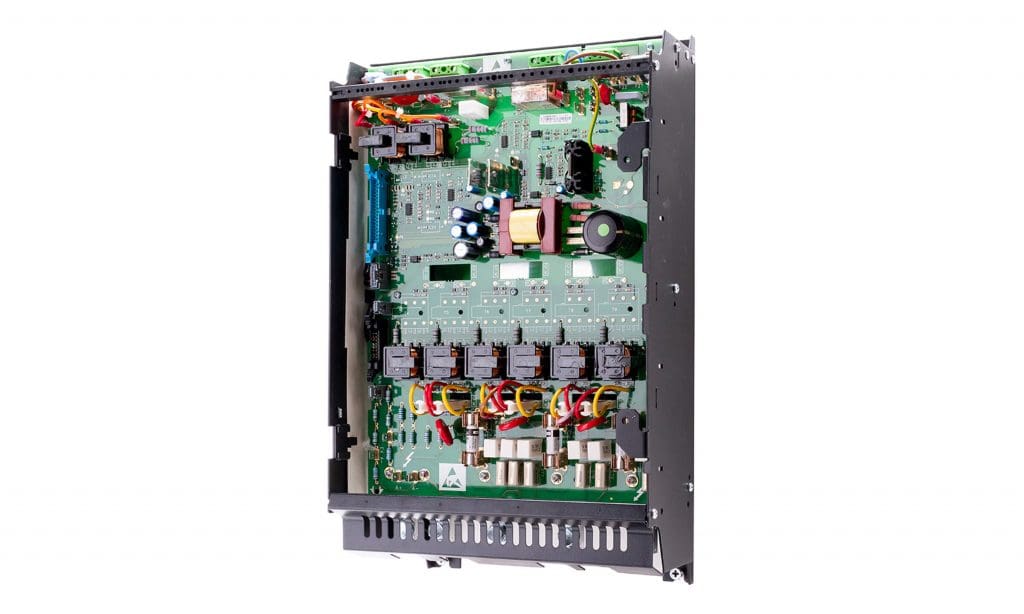
Parker 590S, 591S Range
The Parker 590S and 591S Range comprises standard DC drives designed for dependable speed and torque control across a wide range of industrial applications. Combining straightforward commissioning with reliable motor performance and flexible configuration, the 590S/591S range is ideal for conveyors, extruders, mixers, process machinery and general industrial DC motor control.
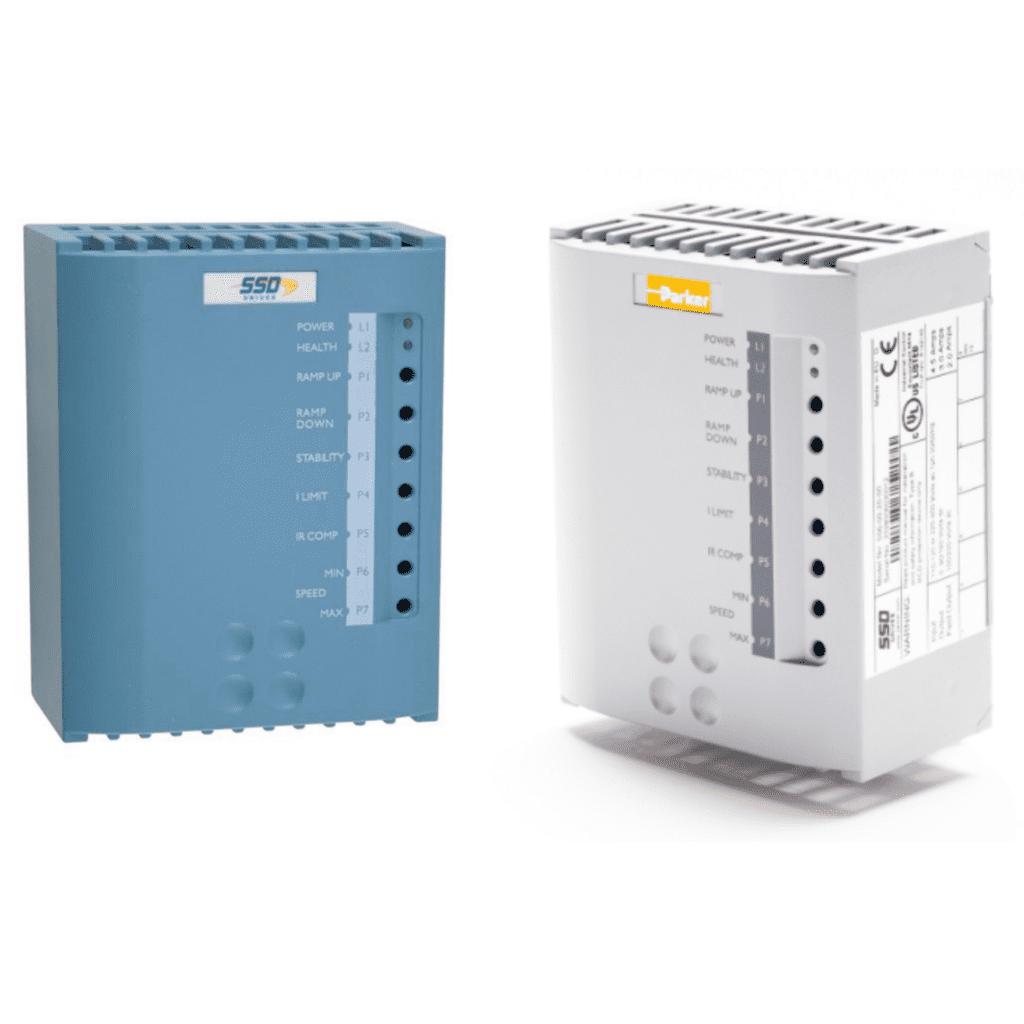
Parker 506, 507, 508 Series
The Parker 506, 507 and 508 are small DC Drives which are now obsolete.
Servo Drives
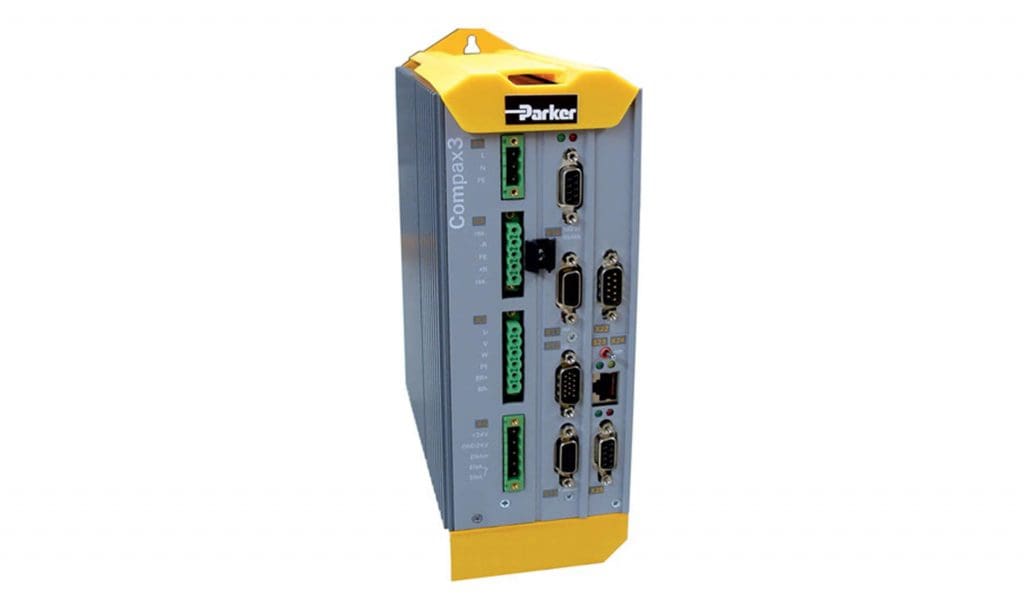
Parker Compax3 Range
The Compax3 range is a Parker SSD Servo Drive. It comes in 4 different options: Single-Axis, High Power, Multi-Axis and Hydraulics Controller.
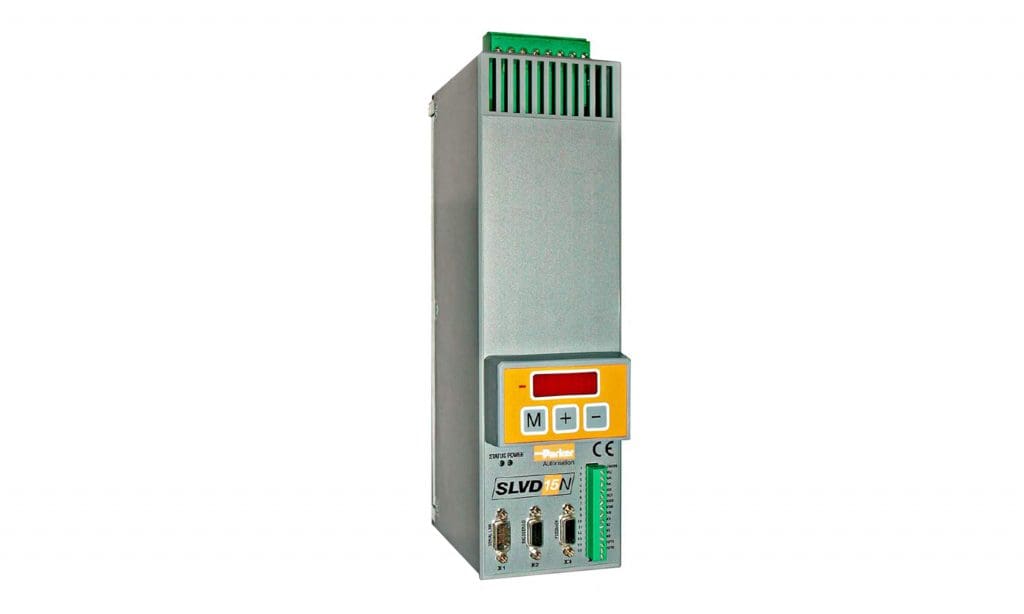
Parker SLVDN Range
The SLVDN range is a Parker SSD Servo Drive.
Obsolete Drives
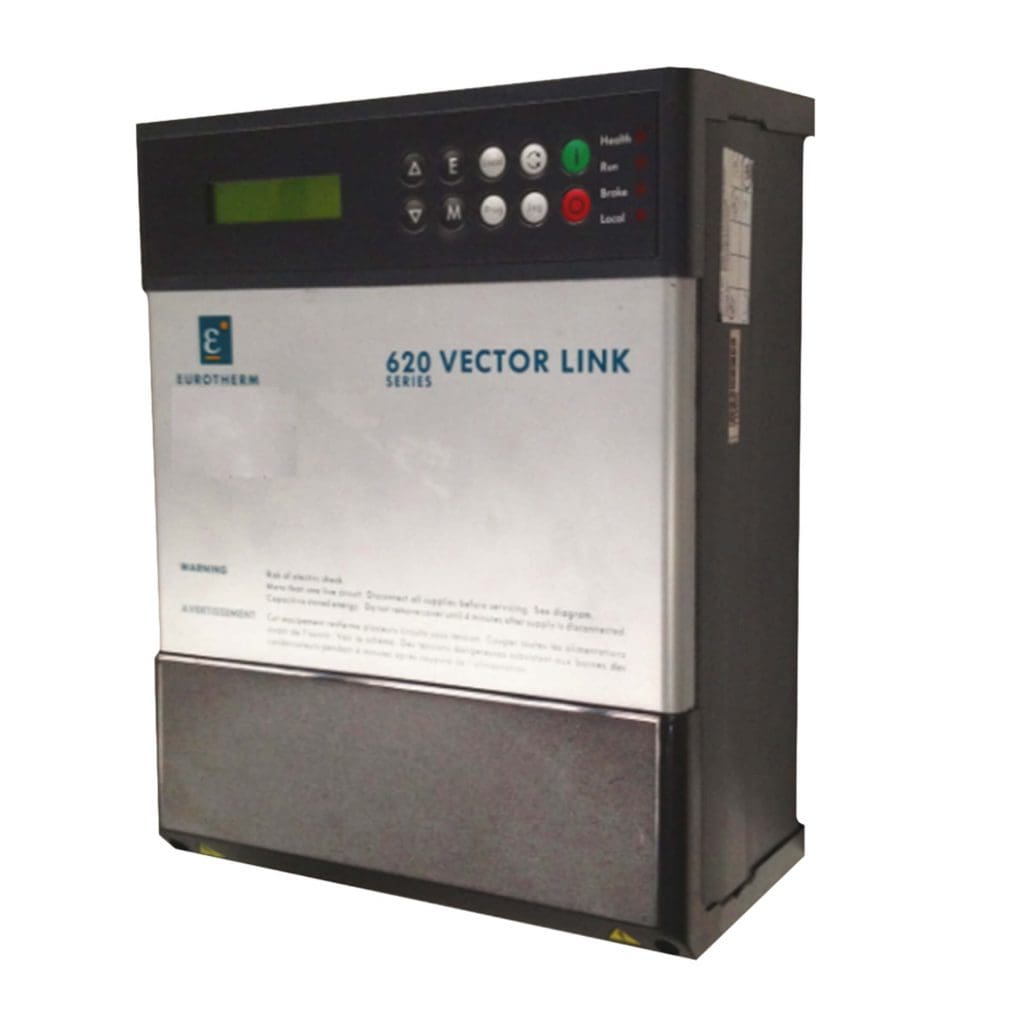
620STD, 620COM, 620L, 620ADV Range
Find downloads and online tools that support the product.

890 CA, CD, CS, SD Range
Find downloads and online tools that support the product.
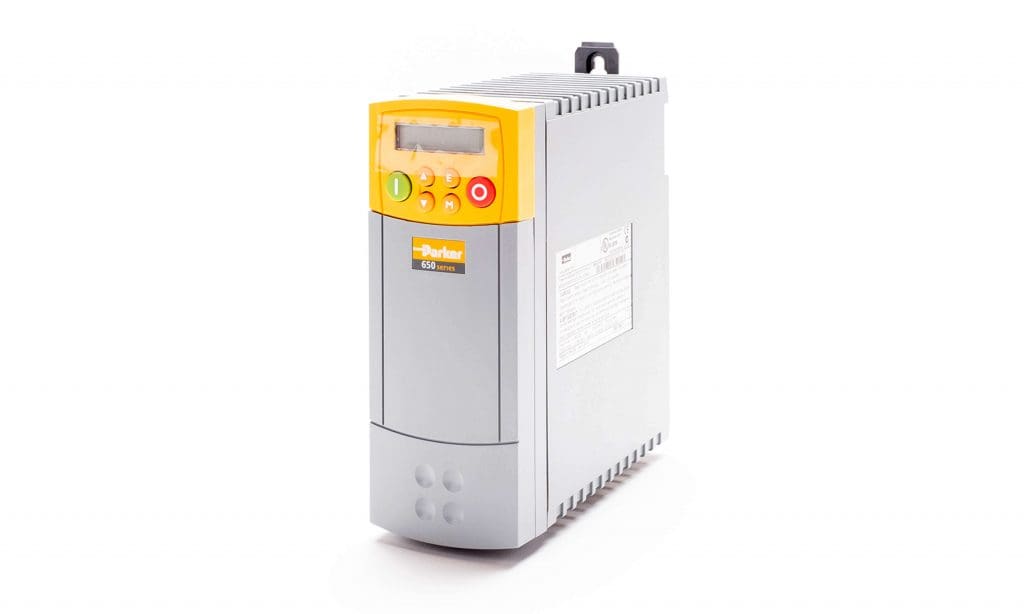
Parker 650 Range
The Parker AC650 is a compact variable speed AC drive providing reliable V/Hz motor control for AC induction motors. Designed for simple commissioning and everyday industrial applications, it is ideal for conveyors, machine spindles, automatic barriers and general-purpose machinery.
Parker 650G Range
The Parker AC650 is a compact variable speed AC drive designed for reliable V/Hz control of AC induction motors. Designed for simple commissioning and everyday industrial applications, it is ideal for conveyors, machine spindles, automatic barriers and general-purpose machinery.
Parker 650S Range
The Parker AC650S is a compact variable speed AC drive designed for reliable speed control of AC induction motors. Combining straightforward commissioning with dependable performance, it is ideal for pumps, fans, conveyors, OEM machinery and material handling systems.
Parker 650V Range
The Parker AC650V is a high-performance variable speed AC drive featuring sensorless vector control for improved speed regulation and high starting torque. Ideal for demanding industrial applications, it is suited to pumps, fans, mixers and high-inertia machinery.
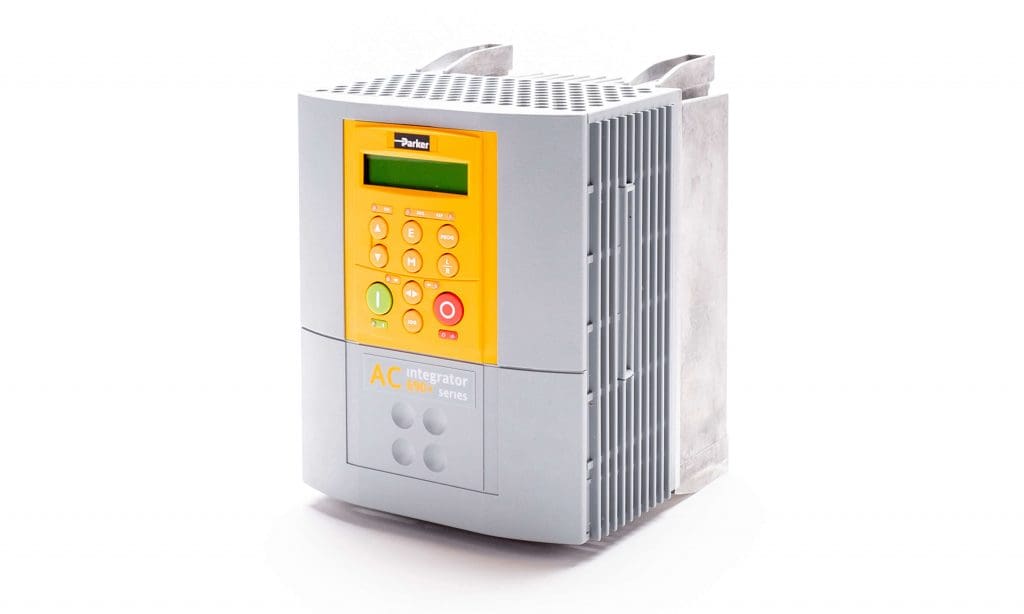
Parker 690 Range
The Parker 690 Series is a high-performance DC drive engineered for reliable speed and torque control of DC motors. Combining advanced control functionality with straightforward commissioning, the 690 Series is an ideal solution for conveyors, extruders, winders, cranes, hoists and general industrial process applications.
Parker 635 Range
Find downloads and online tools that support the product.
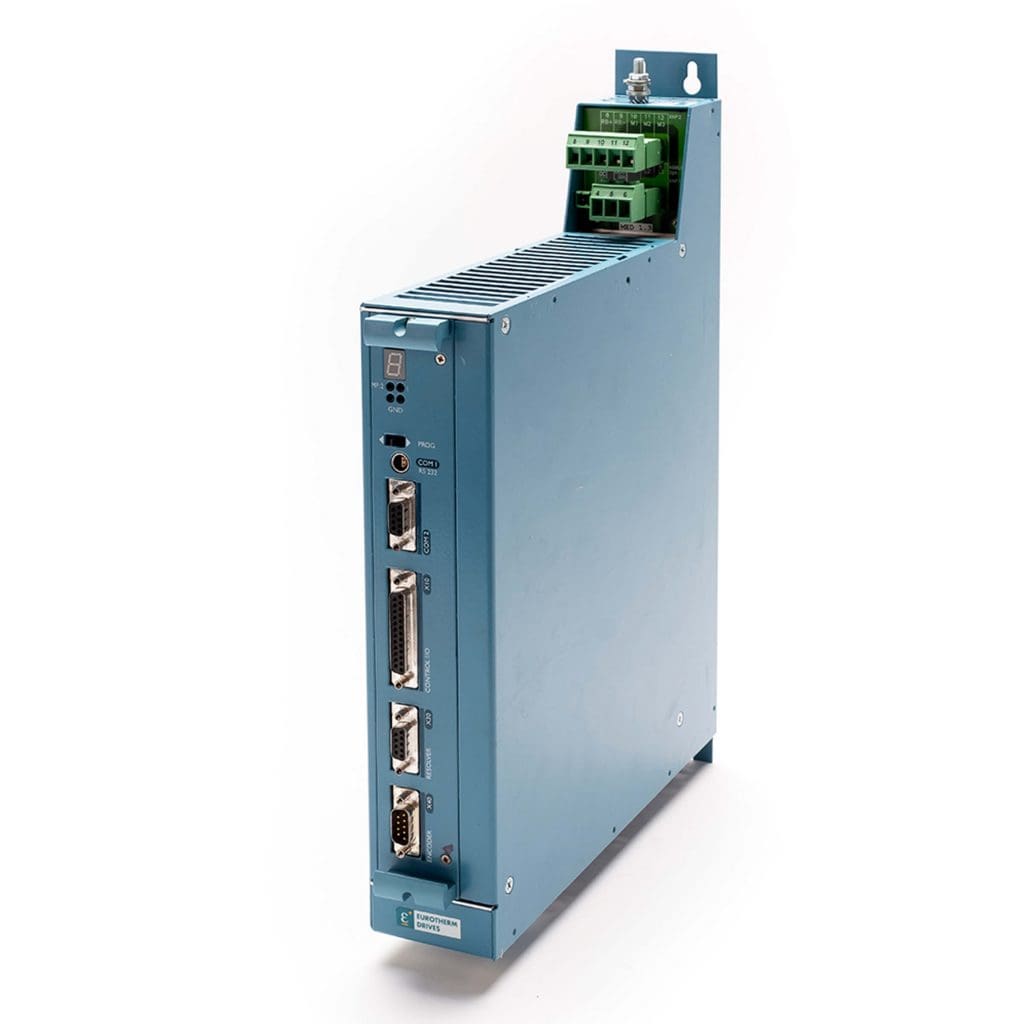
Parker 637F Range
Find downloads and online tools that support the product.
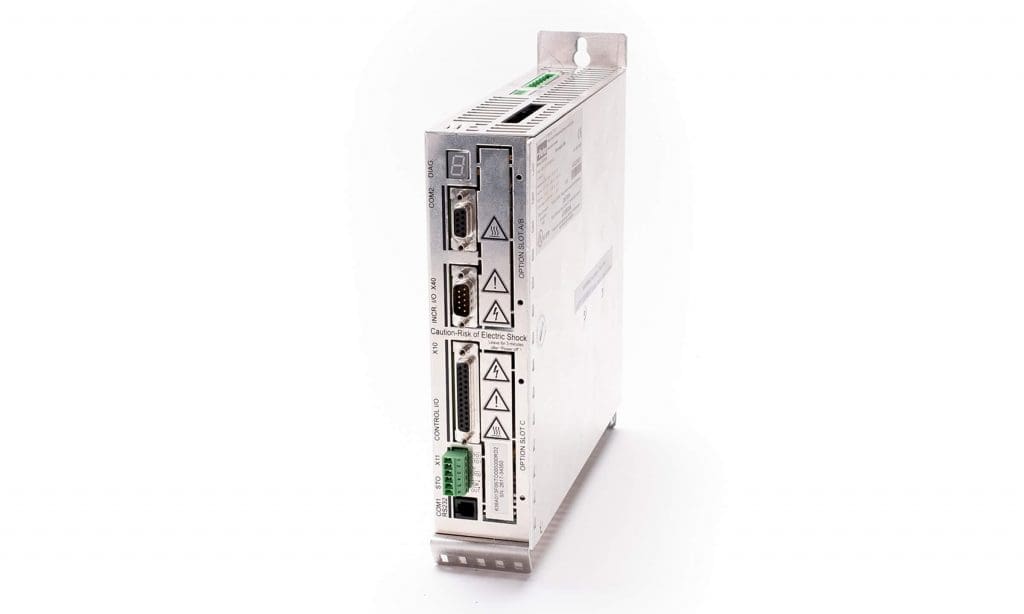
Parker 638 Range
Find downloads and online tools that support the product.
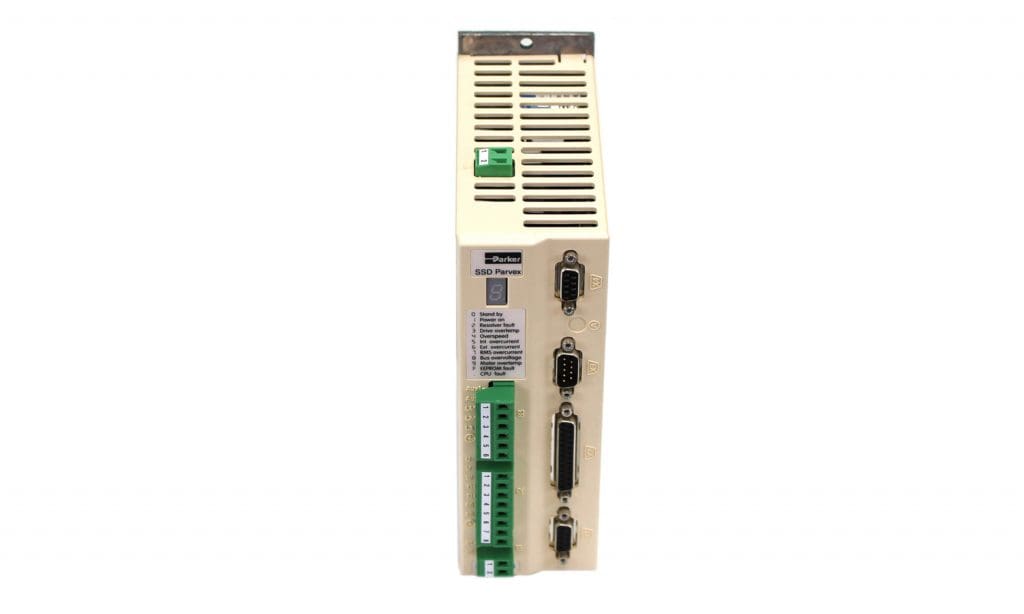
Parker Digivex Range
Find downloads and online tools that support the product.
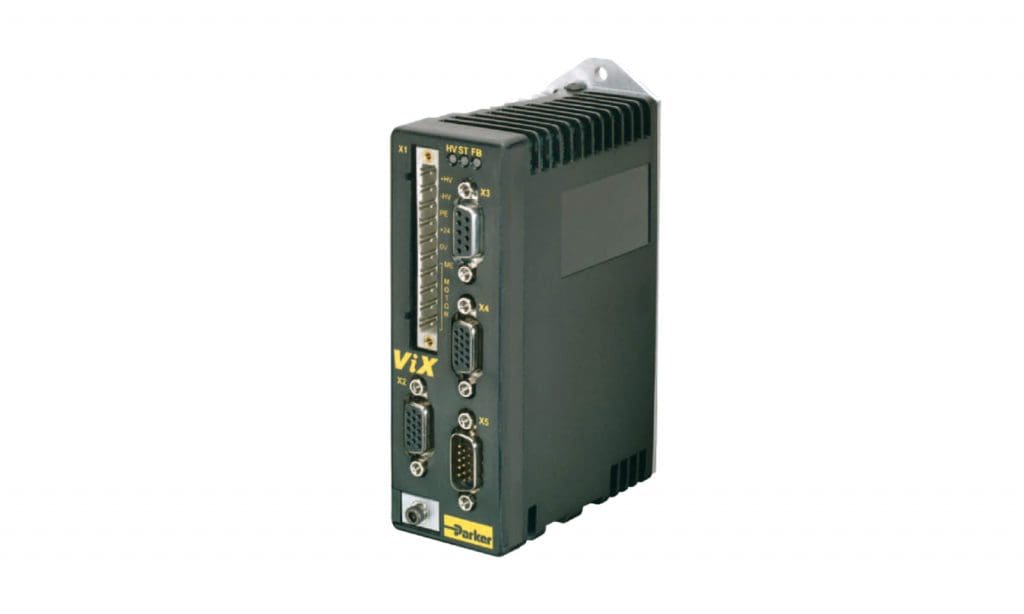
Parker ViX Range
Find downloads and online tools that support the product.
Frequently asked questions
The questions below come up most often when engineers, maintenance teams and OEM buyers contact us about Parker drives. Some are about choosing the right drive in the first place. Others are about getting an existing one back into service. If your question is not covered here, call us on +44 (0)117 938 1800 - we would rather have a five-minute conversation than send you down the wrong path.
Parker’s product range
Questions for buyers, specifiers and engineers choosing between Parker ranges.
Think of them as a feature ladder rather than four unrelated products. They share the same Parker AC drive platform; the difference is what each one lets you do.
- AC10: the basic drive. Designed for simple, single-drive applications like pumps and fans where the motor just needs to run up to speed and stay there. Power range starts at the low end.
- AC15: A compact, cost-effective AC drive designed for general-purpose motor control applications such as pumps, fans, and conveyors, offering reliable performance with simple commissioning and operation. Visually almost identical to the AC20 from the outside; the difference is that it has limited communications. Power range up to 30kW.
- AC20: A flexible, high-performance AC drive that supports both open-loop and closed-loop motor control, making it ideal for demanding applications such as winders, conveyors, and process machinery, with communication options. Power range up to 180kW.
- AC30: High-performance system drive with integrated machine control and maximum flexibility. Built for applications where multiple drives need to talk to each other and coordinate; for example, a conveyor system where every section needs to run at the same speed. The AC30 is often used as a replacement for older 890-series drives and is well suited to coordinated machine control, winding systems, and process lines.
Price scales with required application. If you do not need the features of an AC30, you should not be paying for one. The most common selection mistake we see is buyers reading the spec sheet of a higher-tier drive, deciding they want it, and overpaying for capability they will never use. Call us with the application and we will tell you the smallest drive that does the job properly.
For a more detailed breakdown, download the comparison guide from Parker here.
Open loop means the drive runs the motor without feedback. It sets a speed and trusts the motor to deliver it. Closed loop means the drive receives feedback (usually from an encoder) so it knows exactly where the motor is and how fast it is going and can correct itself in real time.
For open-loop applications, any of the AC10, AC15, AC20 or AC30 will work. For closed-loop, you need an AC20 or above; anything below that does not support encoder feedback.
A practical rule: if accuracy or position matters, you are in closed-loop territory and you need an AC20 minimum. If you just need a motor to run at a set speed and hold it, open loop is fine and a cheaper drive will do the job.
One thing worth noting — if you buy a drive that supports closed-loop and then run it open-loop, you are paying for capability you are not using. Closed-loop is genuinely useful for precision applications (positioning, synchronised motion, anything where slip matters), but it is not the default answer.
The current Parker AC drive range is the AC10, AC15, AC20 and AC30.
The Parker 590 DC drive is still in production. Although Parker class it as a non-core product, however it is available, and we at SDS can provide support, repairs and assistance with these drives. DC drives can still be the right answer for some applications where the capabilities of AC drives have not fully matched yet.
The following drives are obsolete: 650 series (all variants — V, G, S), 690 series, 890 series, and 584. We still supply replacements, repairs and configuration support for all of these - see the next question for recommended modern equivalents.
It depends on the application, but here is where we typically advise customers.
- Parker 650 to AC15 or AC10, however we recommend customers to adopt the AC15 rather than the AC10 in most cases as, it has more safety features compared to an AC10.
- Parker 690 to AC20 if you need a like-for-like upgrade, or AC30 if your application needs the extra system-level features. The 690 sat between the AC20 and AC30 in the original Parker range; it could do everything an AC20 did, with a few extra functions that usually required a separate PCB to enable the functions.
- Parker 590 is still in production, so the answer is normally the 590 itself. If you are looking to move from DC to AC entirely, the right replacement depends heavily on what the application needs — call us and we will work it through with you.
Every replacement we recommend must fit the actual application, not just the model number. The questions we will ask are:
- What is the application?
- What does the motor drive?
- What speed range do you need?
- Is there feedback?
- Are there other drives on the system?
- What are the comms requirements?
Use a servo drive when you need high precision — exact position, exact speed, exact timing. AC drives are designed to spin motors at a chosen speed; servo drives are designed to place motors at a chosen position, repeatedly and accurately, down to fractions of a degree.
Typical servo applications include label printing, document printing, packaging machinery, pick-and-place robotics, and anything where a motor must start, stop and position itself precisely the same way every cycle. Currency printing is a good example — every stamp of the press must land in the same position or the print is rejected.
AC drives, by contrast, are the right answer when you need a motor to run at a chosen speed and hold it — pumps, fans, conveyors running continuously, mixers, extruders. Different job, different tool.
See our full Parker Servo Drives Range page for available models, including the Compax3, 635, 637F, 638, Digivex, SLVDN and ViX.
Different drives use different configuration software. Here is the breakdown.
| Software | Used for | Notes |
|---|---|---|
| DSE Lite | AC10, AC15, AC20, 590, 690 and most single-drive configuration | The default Parker drive configuration tool. Free to download. |
| DSE 890 | AC30 LinkNet, 590 Link, 890 - system-level projects | Used when multiple drives need to talk to each other across a system. Licensed software — supplied on USB with an ID dot file and available to buy here. |
| PDQ / PDD | AC30 drives | Sits alongside DSE 890 for AC30 work. |
| Easy Rider | Parker servo drives | Servo-specific. Not interchangeable with DSE Lite. |
| DSD | Legacy Link systems (now obsolete) | Older fibre-optic networking tool. Mostly historical — included here only for engineers maintaining legacy installations. |
Around 90% of Parker drives we deal with are configured using DSE Lite. The exceptions are AC30 system work, servo drives, and the rare legacy Link installation.
Software downloads and licensing are available on our Software for Drives page.
Troubleshooting
Questions for engineers commissioning, fault-finding or maintaining a Parker drive in service.
All Parker drive manuals - hardware installation, software, programming and quick-start guides - are available on our manuals page. If you know your drive model, search for it there. If you do not, get in touch with the part number from the drive label and we will point you to the right one.
For some larger drives — the AC30 in particular — Parker splits the documentation across two manuals: a hardware installation manual and a software manual, often 150+ pages each.
Every Parker drive has its fault code list in the manual — usually in the troubleshooting section, laid out as a table showing the fault code, what it means, and recommended actions.
How the fault is displayed varies by drive. The AC15, AC20 and AC30 have keypads with full-text displays; you will see something like "Overcurrent" written in plain English. The AC10 has a smaller 2–3 character display, so the same fault will show as "OC" rather than "Overcurrent" — you then look up "OC" in the manual to see what it means and what to do about it.
Older drives like the 690 also give you plain-text fault descriptions on their keypads — they had more sophisticated keypads than the modern AC10 in this respect.
If you have a laptop and the right software, you can also pull fault codes (and the last few fault events from trip history) using DSE Lite or whichever software your drive uses. This is usually faster than reading the keypad, especially if the display is small or the fault is intermittent.
OC stands for overcurrent. It means the drive has detected that the motor is drawing more current than it should — typically more than three times the configured motor current — and has tripped to protect itself and the motor.
Common causes:
- The motor calibration on the drive is wrong (e.g. the drive is set up for a 3-amp motor but the actual motor is 6 amps).
- The motor is mechanically seized, blocked or damaged.
- There is a short circuit somewhere in the motor or its cabling.
- The acceleration ramp is too aggressive for the load.
The drive will trip in around 15 milliseconds when it detects overcurrent, so by the time you see "OC" on the display, it has already protected your equipment. Check the motor nameplate against the drive configuration first — wrong calibration is the most common cause. If the calibration is correct, work mechanically outwards: motor, cabling, then drive.
You may also see "OC2", meaning the overcurrent has been detected on a second motor profile. Parker drives can be configured for two different motors and switched between them. The cause is the same, just on the second profile.
If you cannot clear the fault from the keypad, the underlying condition is still present — fix the cause first, then reset.
An external trip is not a fault inside the drive - it is the drive responding to a signal you have wired in deliberately. The external trip terminal is designed so that breaking a connection (typically via an emergency stop button or a safety interlock) instantly trips the drive.
If you are seeing an external trip fault and you cannot clear it, check:
- The physical wiring of the external trip terminal — is the circuit closed?
- Any emergency stop buttons or safety interlocks in that circuit — are they all in the run position?
- The cable itself — a broken or pulled cable will register as a trip until it is reconnected.
The fault is doing exactly what it was designed to do; the cause is almost always in the wiring or the safety circuit, not the drive itself.
Parameter lists are published in the manual for each drive — every parameter, what it controls, valid values, and defaults.
How you actually programme the parameters depends on the drive:
- AC10 - most users programme from the keypad. The drive does not have an Ethernet port, so to use DSE Lite you need a dedicated lead adapter (which you can buy here). Around 80% of AC10 users programme from the keypad.
- AC15 / AC20 / AC30 - programme using DSE Lite (or DSE 890 / PDQ for system-level AC30 work) connected over standard Ethernet. Programming through software is faster, more reliable, and easier to back up than working through the keypad.
If you are commissioning a drive for the first time, we strongly recommend using DSE Lite rather than the keypad. The keypad is fine for tweaks and for engineers who already know the drive. For commissioning, software is the right tool.
Wiring instructions for each Parker drive — terminal layouts, recommended cable specifications, and connection diagrams - are in the hardware installation manual for that drive. These are typically 100–150 pages for the smaller drives and 500+ pages for the AC30. There are also QuickStart guides available.
Find your drive's hardware manual here.
If you would prefer a single-page wiring reference rather than scrolling through the full manual, contact us with the drive model and we will send the relevant pages.
If you would rather not wire it yourself, we offer on-site commissioning.
The reset procedure is different for every drive series. Within a series (e.g. all AC15 variants), the procedure is the same.
There are two ways to reset:
- Via DSE Lite — connect to the drive and use the software reset function. This is the cleaner option, especially if you want to back up the existing configuration first.
- Via the keypad — using the model-specific key combination from the manual.
For the AC10 specifically, the keypad sequence is well known to our team and we can talk you through it on the phone in under a minute. The AC15 and AC20 are different and slightly less common as reset requests and tend to need software access more often.
Cloning is supported on some Parker drives but not all.. The AC10 can be cloned via the clone module, AC15, AC20 can be cloned to each other (they are technically the same drive with different feature sets enabled), and most other ranges support cloning via either DSE Lite or a microSD card. The AC30 can also be cloned using a SD card.
Two important things to know about Parker clones:
- A clone is a proprietary file format. You cannot open it on your computer or inspect the parameters directly — it is designed to be written into another drive, not read.
- If you extract a configuration via DSE Lite (rather than cloning), you get a source file that DSE Lite can open. You can view the parameters, edit them, and write them back. This is the usual workflow when you want to make changes rather than just copy.
In practice: clone when you are replacing a drive with an identical unit. Extract via DSE Lite when you want to see, edit or version-control the configuration.
Service and commercial
Questions about repair, replacement, programming support and our role as a Parker distributor.
It depends on the drive. For the AC10, AC15 and AC20, repair is usually not cost-efficient. These are relatively low-cost drives and the replacement parts (control boards, power boards) are often cost close to or more than the cost of a new unit. We will typically recommend replacement rather than repair.
However, SDS Drives can support you by pre-programming the replacement before we send it. If you send us the configuration from your existing drive (or just the drive itself if it is salvageable enough to read), we will load that configuration onto the replacement before it ships. You plug it in and it behaves exactly like the old one.
For larger and more complex drives — AC30, 890, 590, servo drives — repair is more often viable and we have a dedicated repair service for these.
See our drive repair service page for the full repair workflow, or contact us with the drive model and fault and we will tell you straight whether repair or replacement is the better commercial call.
Yes. We get a lot of calls — particularly on the AC10 — from small businesses, hobbyists and first-time users asking for programming help.
We can help in three ways:
- Pre-programmed at supply — tell us the application, send us the existing configuration or parameter list, and we will ship the drive ready to run.
- Remote support — we can talk you through the keypad or DSE Lite over the phone, with screen sharing if needed.
- On-site commissioning.
The AC10 is the drive we receive the most programming queries on, because the keypad-only workflow can be challenging for first-time users. If you are setting one up for the first time and finding the keypad frustrating, you are not the first.
Yes to both. Our engineers carry out on-site commissioning across the UK and overseas — useful when you are replacing an obsolete drive in a live system and need to make sure it runs first time. Remote support is also available if the issue does not need physical attendance.
See our on-site commissioning service page and technical support for drives page for more detail.
Yes. SDS Drives is the world's largest certified distributor of Parker SSD products. We have supplied, supported and serviced the full Parker drive range for nearly 30 years.
What that means in practice: we can access Parker's engineering resources directly when we need to, and our team has worked on enough installations across enough industries to recognise most issues on the first call.
Have a different question?
Get in touch and speak straight to an engineer who works with these drives every day.
Software downloads

This is for use with DSE 890 & 590 LNET systems. Built for system integrators and project engineers, this solution allows the creation of up to 50 independent projects, each capable of handling multiple drives.

SDS Drives is a strategic partner and Authorised Repair Centre for Parker Hannifin. We’ve supplied, supported and repaired the full Parker drive range for 30 years. We have direct access to Parker’s engineering resources and a team that has seen enough installations to recognise most issues on the first call.
Get technical support for your Parker Drive
Get in touch and let’s see how we can help get you back to peak performance and to what you do best.
